
Uncollected dog waste attracts pests summer Texas because the intense heat accelerates the decomposition of organic matter, releasing gases that draw in flies, cockroaches, and rodents. To prevent an infestation and minimize health risks, pet owners should remove waste daily to disrupt the lifecycle of these pests and stop odors from spreading.
There is nothing quite like a Texas summer afternoon, but for many Frisco homeowners, stepping into the backyard has become a battle against swarming flies and uninvited pests. When the heat rises, neglected dog waste quickly transforms from a minor chore into a major biological hazard that attracts everything from filth flies to disease-carrying fleas. Understanding the relationship between high temperatures and pest behavior is critical for maintaining a safe environment for your family and pets. In this guide, we will explore the science behind the summer swarm and identify the specific pests currently invading local yards. You will also learn how our professional scooping and sanitization services provide the essential defense needed to stop the cycle of infestation. By the end of this article, you will have a clear strategy to keep your lawn clean, healthy, and entirely pest-free all summer long.
The Science of the Swarm: Why Texas Heat Accelerates Pest Problems
Frisco summers are unforgiving; the relentless heat does more than just stress your lawn. For dog owners, high temperatures fundamentally change the biochemistry of backyard waste. In North Texas, where 90 degree days are the seasonal standard, heat acts as a powerful catalyst for decomposition. This accelerated breakdown occurs because the bacteria already present in the waste consume proteins and fats at a frantic pace compared to cooler environments. As these organic materials decompose, they release concentrated ammonia and sulfur gases. These volatile compounds are highly pungent and can be detected by flies from significant distances, effectively signaling a prime location for feeding and breeding.
In cooler climates, a waste pile might remain relatively stable for several days. However, the Texas sun significantly narrows the window of time before a pile becomes a literal pest nursery. High humidity often locks these gases close to the grass line, preventing them from dissipating and instead creating a concentrated scent footprint. This environment is exactly what female houseflies look for when depositing batches of 75 to 150 eggs. In the peak of summer, these eggs can hatch in less than 12 hours. This means that a pile deposited in the morning can already be infested with larvae by the time you get home from work.
This rapid biological cycle explains why dog waste attracts pests summer Texas homeowners often struggle to manage on their own. Waiting for a single weekend cleanup is often insufficient when the reproductive cycle of a fly is measured in hours rather than days. To prevent your yard from becoming a neighborhood hub for insects, Frisco Doody Free offers flexible scheduling for weekly or bi-weekly visits to ensure waste is removed before the hatching cycle completes. Beyond simple removal, we utilize professional deodorizing and sanitizing treatments to break down the residual chemical signals that attract swarms. Our convenient online booking and payment options allow you to set up a defense plan quickly, ensuring the Texas heat doesn't turn your backyard into a sanctuary for pests.
Common Pests Attracted to Dog Waste in Frisco Backyards

The rapid decomposition of organic matter in the Texas heat does not just produce foul odors; it creates a biological buffet for a specific hierarchy of local pests. While flies are the most visible participants in this cycle, the ecosystem that develops around uncollected waste in Frisco backyards is complex and multi-layered. Because dog waste attracts pests summer Texas homeowners often find their yards overwhelmed by a variety of invaders that thrive in the heat.
Flies are the primary colonizers of these sites. House flies and flesh flies are biologically programmed to seek out moist, decomposing organic material. They do not just feed on the waste; they use it as a nursery. The interior of a waste pile remains hydrated even when the surface of the lawn is baking in the sun, providing the exact conditions fly maggots need to survive and grow.
Cockroaches are equally opportunistic and are frequent visitors to yards with lingering waste. Many species found in North Texas, including the common American cockroach, exhibit coprophagy, which is the biological practice of eating feces. To a roach, dog waste is a high-calorie food source that is easily accessible. When waste is left near the perimeter of a home, these insects often migrate from the yard into crawlspaces or weep holes in the brickwork after they finish feeding.
Rodents, specifically rats and mice, are also drawn to these areas. These animals are opportunistic scavengers looking for the most efficient calorie source available. Because many commercial dog foods are rich in fats, proteins, and grains, significant amounts of undigested nutrients often remain in the stool. For a rodent, these leftover nutrients represent an easy meal. This is particularly problematic in suburban Frisco, where localized rodent populations can spike if they find a consistent food source in a backyard.
Fleas present a different kind of threat tied to the micro-climate under the waste. While adult fleas live on your pet, their larvae require shaded, moist environments to survive. An older waste pile creates a pocket of trapped moisture and darkness against the soil, providing a sanctuary for flea larvae to develop safely away from the dehydrating effects of the Texas sun.
Finally, North Texas fire ants are highly opportunistic scavengers that will readily swarm dog waste to extract moisture and organic material. Their presence adds a layer of physical danger to the yard for both pets and children. Maintaining a clean lawn is the most effective way to disrupt these cycles. Our flexible scheduling for weekly or bi-weekly visits ensures that these attractants are removed before pests can establish a permanent foothold in your outdoor living space.
The Invisible Danger: How Flies and Fleas Spread Disease
The physical presence of pests is only the beginning of the problem. Because dog waste attracts pests summer Texas residents must contend with the invisible reality of enteric pathogens being moved through their outdoor living spaces. House flies act as mechanical vectors; they do not simply sit on waste, they actively transport bacteria. When a fly lands on a pile, microscopic particles of feces containing E. coli and Salmonella adhere to its legs and mouthparts. These flies then travel to patio furniture, the surfaces of outdoor grills, or children’s play sets, depositing these dangerous bacteria exactly where your family is most active.
Fleas also find a biological sanctuary within uncollected waste. While adult fleas are often found on your pet, the larval stage requires a specific micro-environment to survive the intense North Texas heat. Dog waste provides the essential moisture and organic matter that flea larvae need to thrive before they pupate and transition into biting adults. This cycle turns your lawn into a high-pressure zone for infestations that can easily migrate into your home and onto your furniture.
Preventing these health risks requires a consistent removal strategy to disrupt the lifecycle of these pests. Frisco Doody Free offers flexible scheduling for weekly or bi-weekly visits to ensure waste never stays long enough to become a disease reservoir. To address the bacteria that remain even after physical removal, we utilize professional deodorizing and sanitizing treatments designed to neutralize pathogens at the source. Our convenient online booking and payment options make it simple to maintain a yard that is both clean and safe for your family throughout the hottest months of the year.
Why Long Grass and Summer Rain Make Pest Problems Worse
Maintaining a manicured lawn is a constant struggle in North Texas, but letting grass grow too long creates a functional incubator for pests. Dense, tall blades trap humidity and block airflow, preventing the soil from drying out after a morning dew or a sprinkler cycle. This stagnant, humid environment provides a sanctuary for flies to hide from the midday sun and allows mosquitoes to rest in the cool shade between feedings. When waste is buried in long grass, it stays moist for days, ensuring that dog waste attracts pests summer Texas heat would otherwise naturally dehydrate.
Summer thunderstorms and North Texas flash floods exacerbate this issue significantly. A heavy downpour can physically break down solid waste, liquefying it and washing bacterial particles across a much larger surface area of your turf. This process dramatically increases the scent footprint of the waste. Instead of a localized odor, the rain creates a wide trail of contamination that acts as a biological beacon for scavengers and flies across the neighborhood.
To combat this, we recommend keeping your turf height managed and utilizing our flexible scheduling for weekly or bi-weekly visits. Removing the source before a storm hits prevents the liquid spread of pathogens across your yard. For instances where rain has already dispersed contaminants, our professional deodorizing and sanitizing treatments help neutralize the lingering scent markers that standard cleanup misses. With our convenient online booking and payment options, you can ensure your yard remains a clean, safe environment regardless of unpredictable weather patterns.
How to Keep Flies and Pests Away From Your Yard This Summer

Managing a North Texas yard during July and August requires more than a casual cleanup; it demands a tactical approach to sanitation. Since the humidity and heat ensure that dog waste attracts pests summer Texas homeowners must implement a strict maintenance routine to break the cycle of infestation before it moves from the lawn to the home.
The first line of defense is your mower. Keeping your grass height low removes the shade and moisture-trapping canopy that flies and flea larvae depend on for survival. When you do pick up waste, store it in a dedicated outdoor bin with a tight-sealing gasket. Standard trash cans often have gaps that allow odors to escape and flies to enter, essentially turning your waste bin into a secondary breeding site near your house.
For areas near your patio or back door, you can utilize natural repellents to discourage activity. Scents like peppermint, lemongrass, and eucalyptus are highly offensive to flies and can help create a deterrent perimeter. However, it is vital to distinguish between masking an odor and neutralizing it. Masking with heavy fragrances only covers the scent temporarily. True control requires neutralizing the biological compounds that signal pests. During the peak of a Frisco summer, the traditional weekly cleanup is often insufficient. Picking up waste immediately is the most effective DIY method to prevent flies from depositing eggs.
For those who cannot manage daily scooping, Frisco Doody Free provides flexible scheduling for weekly or bi-weekly visits to maintain a low-pest environment. We also offer professional deodorizing and sanitizing treatments that go beyond surface cleaning to eliminate the underlying chemical attractants. You can secure these services through our convenient online booking and payment options to keep your backyard clean and comfortable throughout the hottest months.
Professional Sanitization: The Frisco Doody Free Advantage
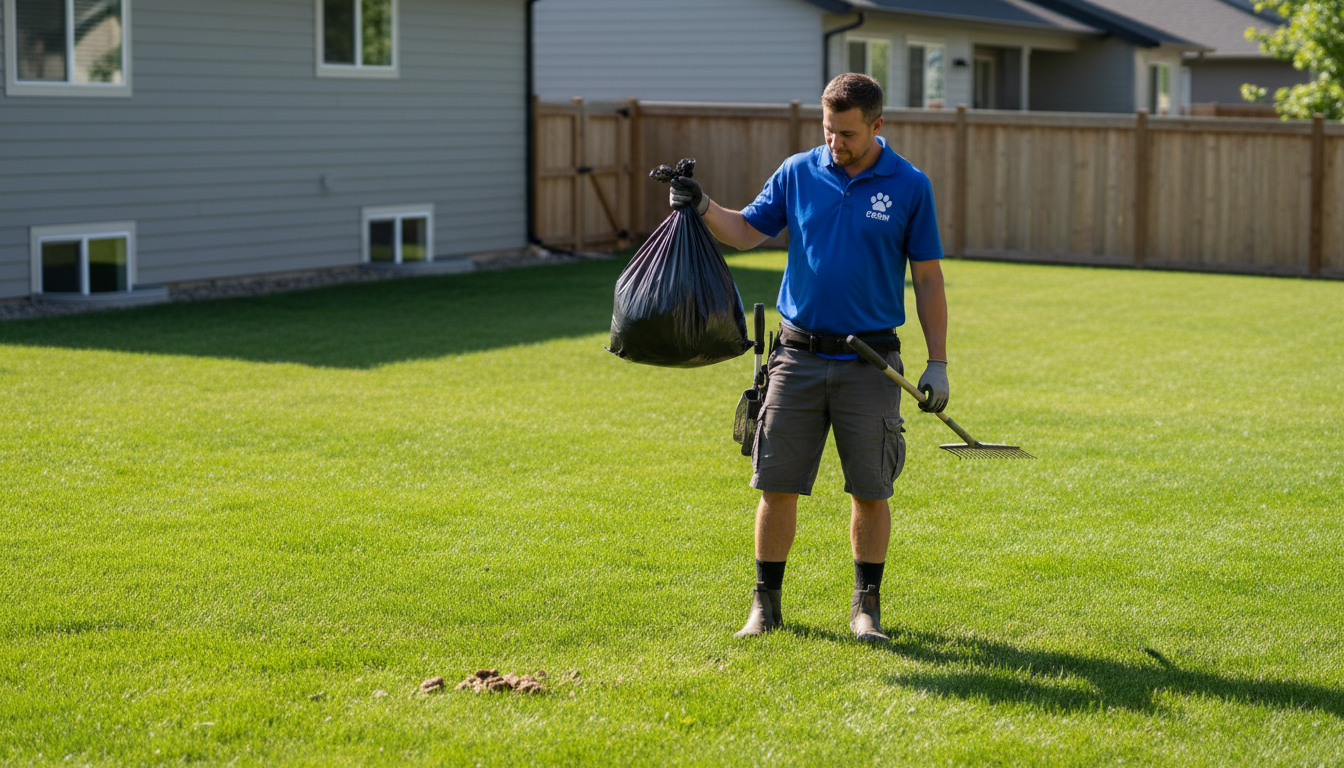
In North Texas, simply scooping the yard is often just the beginning of effective pest management. While physical removal eliminates the primary breeding ground, the microscopic reality is that bacteria and chemical scent markers remain embedded in the soil and grass blades. Because dog waste attracts pests summer Texas heat ensures these residual odors stay concentrated near the ground, signaling to flies and roaches that your lawn remains a viable food source.
Frisco Doody Free addresses this biological footprint through professional deodorizing and sanitizing treatments. These specialized applications do not merely mask smells with heavy fragrances; they utilize enzymatic agents to break down the proteins and sulfur compounds that attract scavengers. This process neutralizes enteric pathogens at the source, creating a sterile environment that a standard plastic bag and garden hose cannot achieve. By combining thorough removal with sanitization, we provide a layer of defense that disrupts the cycle of infestation. Homeowners can maintain this standard through flexible scheduling for weekly or bi-weekly visits and utilize our convenient online booking and payment options to ensure their backyard stays a clean, functional extension of their home.
Keeping your backyard clean is the best way to prevent flies and other pests from invading your Texas home this summer. Regular scoop sessions significantly reduce the smells and breeding grounds that attract these swarms in the heat. While consistency is the key to a pest-free lawn, keeping up with the cleanup can be a chore. If you want expert help maintaining a fresh yard without the hassle, our professional cleanup services ensure your property stays sanitary and comfortable for everyone to enjoy.